Host: Dwarkesh Patel
Dwarkesh Patel hosts long-form interviews with researchers, founders and historians on artificial intelligence, technology, science and history.
Read structured takeaways and actionable insights from Dwarkesh Podcast
Dwarkesh Podcast
Noam Brown and Dwarkesh Patel discuss multi-agent AI, math progress, research acceleration and alignment. Brown describes experiments with minimal structure and raises concerns about safety evaluations, visible reasoning and models recognizing test environments. These are his research observations and uncertain forecasts in September 2026.
Dwarkesh Podcast
Dylan Patel and Dwarkesh Patel discuss AI compute spending, lab economics, chip supply and which parts of the value chain may benefit. They debate debt pressure and the concentration of compute in a few labs. Figures and future scenarios are Patel's estimates and arguments, not verified outcomes or investment advice.
Dwarkesh Podcast
A Dwarkesh Podcast conversation with Ada Palmer, a historian at the University of Chicago and science fiction author, about Machiavelli and The Prince: why Italy was so unstable in 1513, how the papacy and city-state governments worked, and what Machiavelli meant by liberty and fair justice. PARTIAL COVERAGE: the episode runs about 128 minutes and the available caption text is cut off, so this summary covers the opening historical context and the discussion of Cesare Borgia (called Valentino), and not later topics. This is a historical discussion of 16th-century Italy and Palmer's interpretation, not a view on current politics.
Dwarkesh Podcast
David Reich and Dwarkesh Patel discuss a new ancient-DNA study of selection over time, its statistical challenges and Bronze Age changes. These notes focus on source-read study and method passages; later farming and Neanderthal hypotheses remain topics in the full video. Research findings are attributed and provisional, with no ranking of present-day populations or individual traits.
Dwarkesh Podcast
Michael Nielsen and Dwarkesh Patel discuss how scientific ideas advance when experiments are ambiguous or verification is slow. Historical examples lead to questions about anomalies, selection bias, alternative technology paths, quantum computing and how to learn deeply. Claims about other civilizations are explicitly speculative.
Dwarkesh Podcast
Dario Amodei and Dwarkesh Patel on scaling, generalization, sample efficiency and diffusion. Selected early sections only, excluding later finance, policy, national competition and constitution topics. Predictions are his dated February 2026 claims, not independently verified findings. Untimed editorial sections are not video chapters.
Dwarkesh Podcast
Dwarkesh Patel and John Collison question Elon Musk about orbital data centers, power availability and AI. This focused summary covers selected infrastructure and alignment arguments, not the full manufacturing, political or later chip discussion. Costs, technical estimates and the 36-month forecast are participants’ dated claims, not independently verified conclusions or investment advice.
Dwarkesh Podcast
Ilya Sutskever talks with Dwarkesh Patel about uneven model capability, reinforcement learning, human generalization, SSI, alignment and research taste. He argues that the next advances need new learning ideas as well as compute. These are his views and scenarios in November 2025, not established AGI timelines.
Dwarkesh Podcast
Satya Nadella talks with Dwarkesh Patel and Dylan Patel about AI business models, Copilot, Microsoft models, datacenter design, chips and global trust. A tour of Fairwater 2 frames his argument that flexible infrastructure and changes to how people work matter as much as model capability. These are Nadella's views as Microsoft CEO in November 2025.
Dwarkesh Podcast
Andrej Karpathy and Dwarkesh Patel discuss the gaps between impressive model tests and dependable agents, reinforcement learning, how humans learn, coding and the future of education. Karpathy explains his decade-scale AGI outlook and argues that progress may fit into a long economic growth curve. His timelines and growth scenarios are opinions from October 2025.
Dwarkesh Podcast
Richard Sutton and Dwarkesh Patel debate goals, continual learning, world models and whether LLMs are a good starting point for experiential intelligence. Selected technical discussion, excluding the closing succession debate. Contested claims remain attributed to Sutton and challenged by Patel.
Dwarkesh Podcast
A Dwarkesh Podcast conversation with Joseph Henrich, professor of evolutionary biology at Harvard and author of The Secret of Our Success and The Weirdest People in the World, on how cultural evolution let humans out-compete smarter species, how brain size changed, and why some societies became so psychologically distinctive. PARTIAL COVERAGE: the episode runs about 113 minutes and the available caption text is cut off partway through the Weirdest People thesis, so later topics are not covered. These are Henrich's research arguments and opinions, summarised here without endorsement.
Dwarkesh Podcast
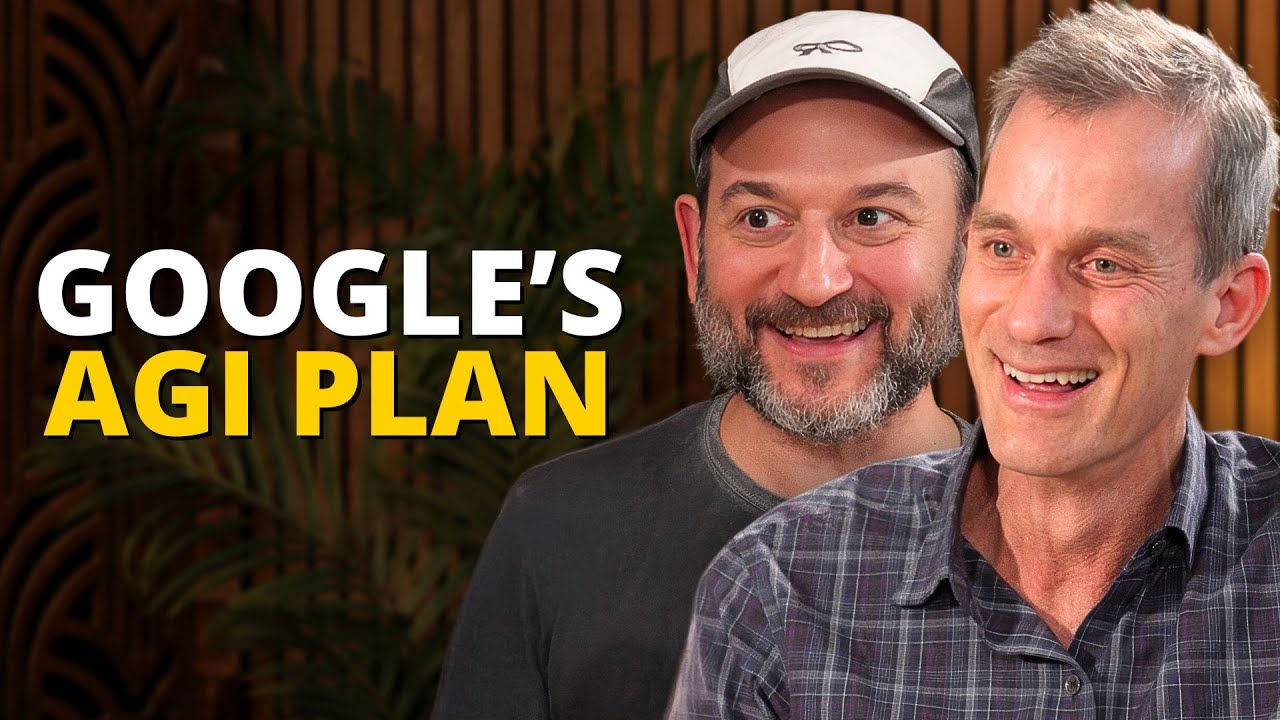
Jeff Dean and Noam Shazeer talk with Dwarkesh Patel about Google's early systems, hardware, language models and AI research. They explain how data-movement costs shape algorithms, why hardware and software need co-design, and how ideas and research culture contribute alongside scale. This is their February 2025 perspective, not a guaranteed AGI roadmap.
Dwarkesh Podcast
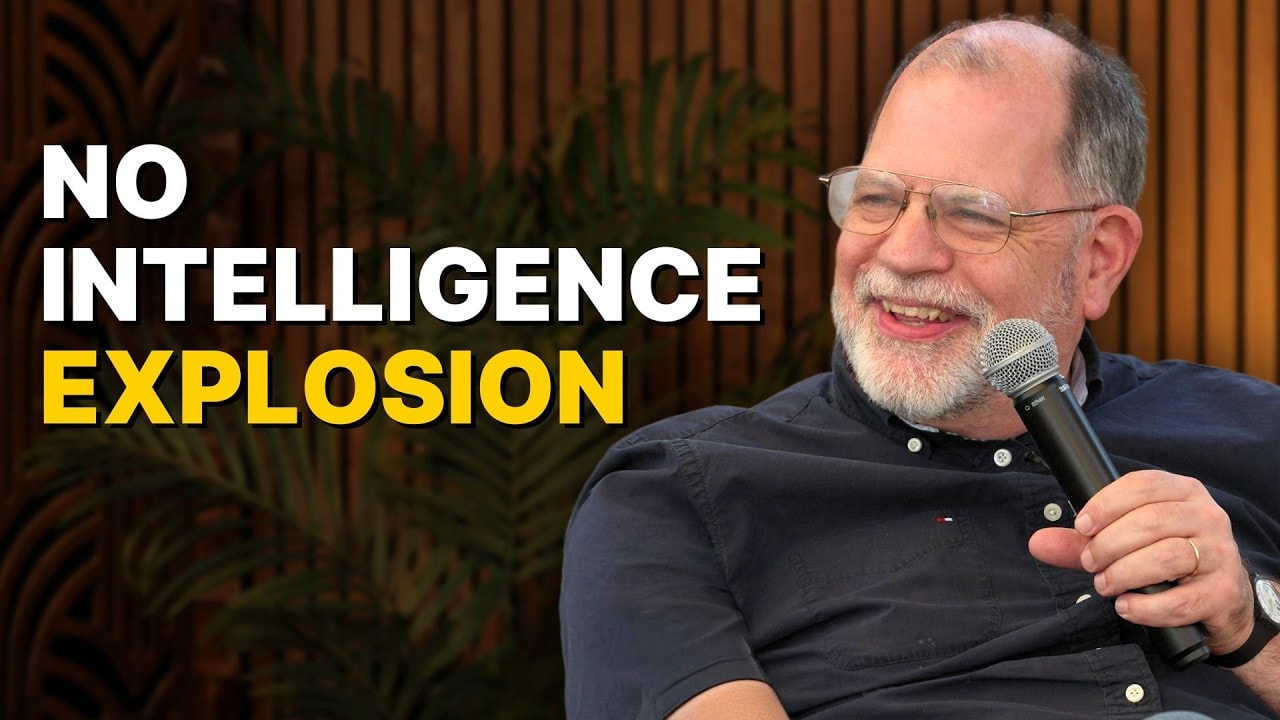
Tyler Cowen and Dwarkesh Patel discuss AI-driven growth, human bottlenecks, progress studies, evaluating ideas and the slow diffusion of innovation. Cowen expects important long-run change but questions rapid-takeoff stories, and explains why practical execution and the risks of war still matter. These are his economic views from January 2025, not investment advice.
Dwarkesh Podcast
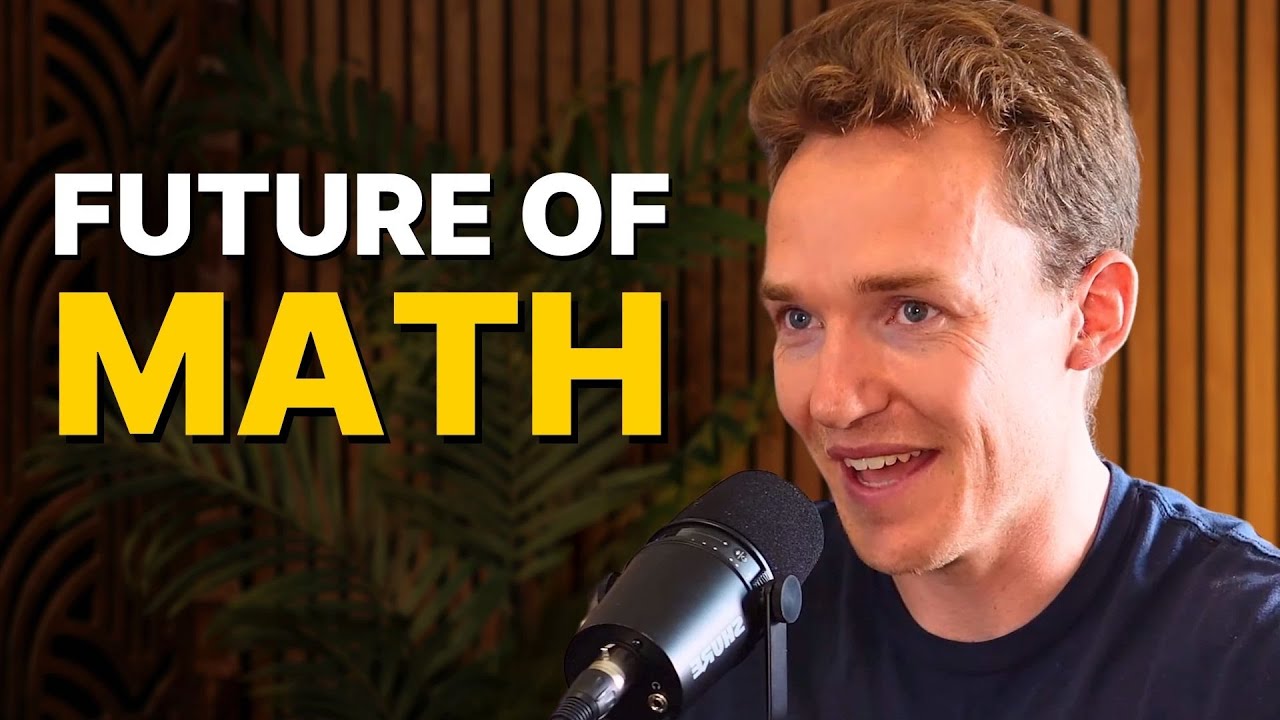
Grant Sanderson and Dwarkesh Patel discuss AI and math competitions, mathematical talent, the history of new ideas, education and making explanations. Sanderson recounts starting 3Blue1Brown without an expectation of audience growth and explains how the Summer of Math Exposition helped creators finish projects. This is their October 2023 conversation.