Host: Sam Altman and guest lecturers
A historical series of 20 startup lectures taught at Stanford in fall 2014, organized by Sam Altman with speakers from Y Combinator and technology companies. Topics include ideas, products, users, growth, hiring, fundraising, culture and operations. This is the 2014 course archive, not a current interview show. Speaker roles and company examples reflect that period.
Read structured takeaways and actionable insights from How to Start a Startup (Stanford CS183B, 2014)
How to Start a Startup (Stanford CS183B, 2014)
Sam Altman closes the historical Stanford startup course with the shift from building a product to building a company. He discusses clear reporting lines, delegating decisions, recording how work is done, onboarding people and keeping teams aligned as they grow. Notes cover selected business passages from the first roughly 49,700 characters of public auto-captions for the 48-minute lecture, with identity checked against the official Stanford CS183B archive. The date is the December 4, 2014 video upload. The final fundraising answer is cut off. Founder psychology, burnout and outdated tax-structuring suggestions are not summarized. Legal, HR and compensation examples reflect 2014 and are not current compliance guidance.

How to Start a Startup (Stanford CS183B, 2014)
Tyler Bosmeny explains founder-led sales, from finding prospects to asking useful questions and reaching a clear decision. Michael Seibel then breaks a short investor pitch into a plain explanation of the business, market and traction, followed by a mock meeting with Dalton Caldwell and Qasar Younis. Notes cover the first roughly 49,700 characters of public auto-captions for this historical 49-minute Stanford lecture, with names checked against the official CS183B archive. The date is the December 2, 2014 video upload. The final section is cut off. Sales, fundraising and contract opinions describe the speakers' 2014 experience, not legal advice or guaranteed outcomes.
How to Start a Startup (Stanford CS183B, 2014)
Emmett Shear explains how conversations with broadcasters helped Twitch move beyond assumptions made at Justin.tv. In this historical Stanford lecture, he demonstrates a user interview, separates current behavior from feature requests and compares existing users, competitors' users and people who have not adopted any service. Notes cover selected public auto-caption passages for the 46-minute lecture, with speaker identity checked against the official Stanford CS183B archive. The date is the November 13, 2014 video upload. Twitch examples, platform comparisons and language-market observations reflect 2014. The captions include audience questions; interview-method claims are Shear's guidance rather than universal research rules.
How to Start a Startup (Stanford CS183B, 2014)
Keith Rabois discusses moving from a product people like to an organization that can deliver consistently. In this historical Stanford lecture, he uses an editor metaphor for management, explains delegation based on experience and consequences, and argues for clear priorities and measures of results. Notes cover selected operating passages from roughly 49,700 characters of public auto-captions for the 47-minute lecture, with course identity checked against the official Stanford CS183B archive. The date is the November 6, 2014 video upload. Company examples and management opinions reflect 2014, not universal employment rules. Some closing questions are outside the source coverage; office-culture claims are the speaker's views rather than verified requirements.

How to Start a Startup (Stanford CS183B, 2014)
Reid Hoffman challenges the idea that a founder must be exceptional at every task. In this historical Stanford lecture, he discusses complementary co-founders, networks suited to the problem, informed disagreement and using a clear thesis to decide when to persist or change. Notes cover selected business passages from roughly 49,700 characters of public auto-captions for the 50-minute lecture, with course identity checked against the official Stanford CS183B archive. The date is the November 4, 2014 video upload. Company examples and speaker roles reflect 2014. The notes do not cover every closing question or endorse the lecture's personal work-life-balance advice.
How to Start a Startup (Stanford CS183B, 2014)
Aaron Levie describes why Box moved toward enterprise customers and how cheaper computing, cloud delivery and user-led adoption changed the opportunity for new software companies. The historical Stanford lecture also covers starting with a narrow problem, finding advantages incumbents cannot easily copy and learning from customers at the edge of an industry. Notes cover selected passages from the public auto-captions for the 46-minute lecture, with speaker identity checked against the official Stanford CS183B archive. The date is the October 30, 2014 video upload. Company figures, market sizes and predictions reflect 2014. The available captions reach the closing remarks; examples and business opinions are not current product or market guidance.
How to Start a Startup (Stanford CS183B, 2014)
Alfred Lin and Brian Chesky discuss how shared values become daily behavior rather than a list on a wall. The historical Stanford lecture links early hiring, trust, accountability and internal communication with the experience a company promises customers. Notes cover selected culture and business passages from the first roughly 49,700 characters of public auto-captions for the 50-minute lecture, with names checked against the official Stanford CS183B archive. The date is the October 24, 2014 video upload. The final customer-experience example is cut off. Practices, company figures and Airbnb program descriptions reflect 2014, not current hiring or host policies. Political-themed cereal anecdotes, violence metaphors and personal-distress passages are not summarized.

How to Start a Startup (Stanford CS183B, 2014)
Marc Andreessen, Ron Conway and Parker Conrad discuss what investors look for, why a stronger business matters more than a polished pitch and how capital can fund the removal of specific risks. The historical Stanford panel also covers written commitments, introductions and choosing investors for a long relationship. Notes cover the first roughly 49,700 characters of public auto-captions for the 50-minute panel, with names checked against the official Stanford CS183B archive. The date is the October 21, 2014 video upload. The final questions are cut off. Firm processes, valuations, dilution ranges and company examples describe 2014, not current funding offers or legal or investment advice. A passing machine-learning reference is not summarized.
How to Start a Startup (Stanford CS183B, 2014)
Stanley Tang, Walker Williams and Justin Kan explain how DoorDash, Teespring and Twitch approached early customers and publicity. Their historical Stanford lecture moves from a simple delivery experiment to hands-on customer support, fast product tests and pitching news to the right audience. Notes cover the first roughly 49,700 characters of public auto-captions for the 52-minute lecture, with speaker identities checked against the official Stanford CS183B archive. The date is the October 16, 2014 video upload. The final questions are cut off. Revenue, fundraising and customer figures describe 2014; founder anecdotes and press tactics are not guarantees. Personal-distress passages and a closing reference to deceptive press tactics are not summarized.

How to Start a Startup (Stanford CS183B, 2014)
Wufoo co-founder Kevin Hale explains how small product details, useful documentation and direct customer support can make software easier to use and worth recommending. He argues that engineers should hear customer problems themselves, then uses Wufoo examples to discuss reducing friction and keeping a small team close to users. Notes cover selected product and support passages from roughly 49,700 characters of public auto-captions for this 48-minute historical lecture. Course identity is checked against the official Stanford CS183B archive; the date is the October 14, 2014 video upload. Company figures, interface examples and research claims are those presented in 2014, not current verified benchmarks. Relationship metaphors and personal material are not treated as wellbeing advice, and some closing questions may be outside the source coverage.
How to Start a Startup (Stanford CS183B, 2014)
Alex Schultz teaches a growth-focused lecture in Stanford's 2014 How to Start a Startup course, starting with retention and the moment users first understand a product's value. He explains choosing a company-wide metric, aligning acquisition with real activity, and using examples from eBay, Facebook, Hotmail and PayPal to discuss distribution. Notes cover selected business passages from roughly 49,700 characters of public auto-captions for the 47-minute lecture; the closing section is not covered. Course identity is checked against the official archive and the date is the October 9, 2014 video upload. Company statistics, search tactics and platform behavior are historical examples, not current verified guidance. The introductory physics example is not summarized.

How to Start a Startup (Stanford CS183B, 2014)
Peter Thiel argues that creating value and retaining a share of it are different problems. His historical Stanford business lecture examines market definitions, starting with a small customer group, building lasting advantages and thinking beyond a short-lived lead. Notes cover selected strategy passages from about 47,400 characters of public auto-captions for the 50-minute lecture, with identity checked against the official Stanford CS183B archive. The date is the October 7, 2014 video upload. The captions reach the closing remarks. Company figures and predictions reflect 2014; monopoly arguments are Thiel's perspective, not legal advice or a recommendation to break competition rules. Personal-psychology, diagnosis and psychotherapy remarks are not summarized.

How to Start a Startup (Stanford CS183B, 2014)
In this historical Stanford startup lecture, Adora Cheung describes learning the cleaning business firsthand, finding initial customers, gathering candid feedback and measuring whether customers return. Her Homejoy examples connect manual work with product design, channel testing and retention. Notes cover selected business passages of the public auto-captions for the 52-minute lecture, checked against the official Stanford CS183B archive. The date is the October 2, 2014 video upload. Homejoy figures and growth claims describe 2014, not the company today. An early therapy-platform example is not summarized; growth and payback guidance is Cheung's view, not a universal business rule.
How to Start a Startup (Stanford CS183B, 2014)
Paul Graham argues that understanding users and making something they want matter more than mastering the outward rituals of a startup. His historical Stanford lecture connects useful side projects, domain expertise and curiosity with the discovery of ideas worth pursuing. Notes cover selected product and learning passages from about 46,300 characters of public auto-captions for the 48-minute lecture, with speaker identity checked against the official Stanford CS183B archive. The date is the September 30, 2014 video upload. The captions reach the final questions. Personal-distress, work-life and age-prescriptive passages are not summarized. Claims about startup success, education and fundraising are Graham's 2014 opinions, not universal rules.
How to Start a Startup (Stanford CS183B, 2014)
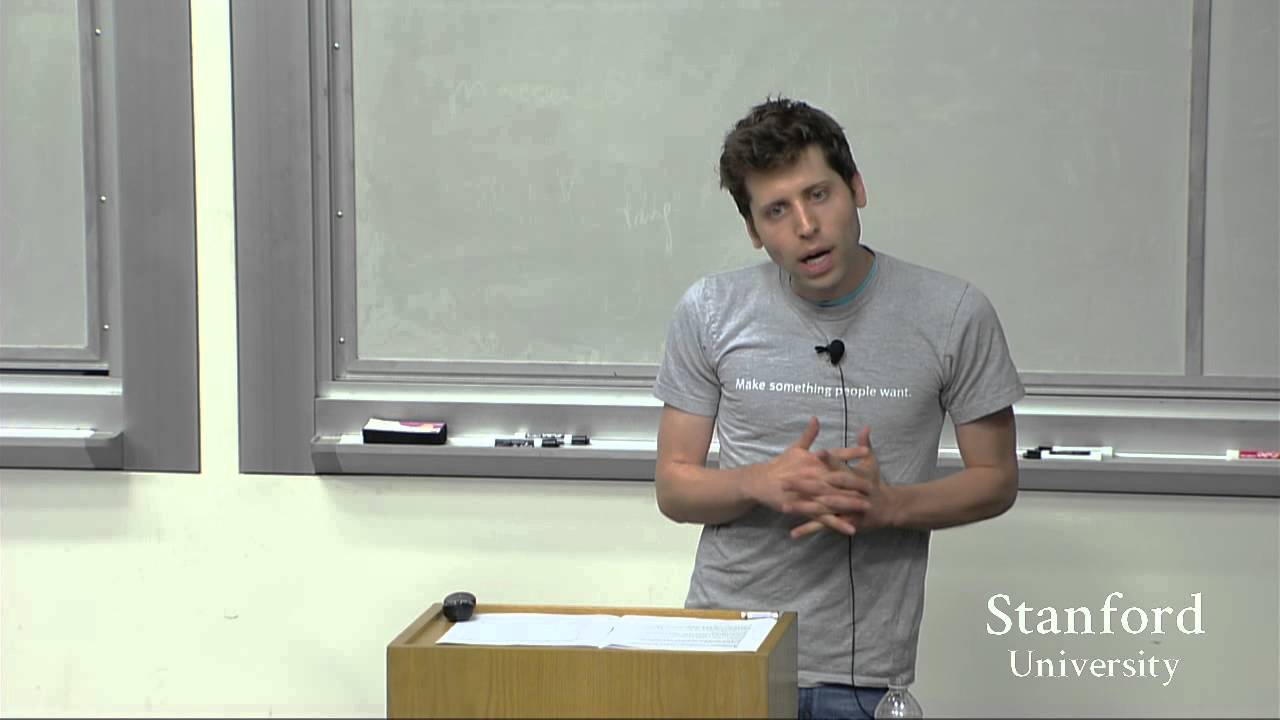
Sam Altman's second lecture in Stanford's 2014 How to Start a Startup course focuses on choosing co-founders, hiring a small early team and executing with focus, speed and quality. He argues for people who are resourceful, calm and capable, then explains referral recruiting, practical work tests and basic management habits. Notes cover selected hiring and execution passages from public auto-captions, with course identity checked against the official archive. The date is the September 25, 2014 video upload and the linked version runs about 46 minutes. Opening burnout and mental-health discussion is not summarized. Company examples, remote-work opinions and hiring claims reflect 2014, not universal or current rules; this is not legal or employment advice.
How to Start a Startup (Stanford CS183B, 2014)
In the opening lecture of Stanford's 2014 How to Start a Startup course, Sam Altman discusses ideas, markets and building a product a small group of users loves. Dustin Moskovitz adds a separate account of why founding a company is not the only route to useful work or financial upside. These notes focus on Altman's business and product material from public auto-captions, with the historical course identity checked against its official archive. Personal mental-health passages are not summarized. The date is the September 23, 2014 video upload, and the linked version runs about 44 minutes. Company examples, roles and financial illustrations are from 2014, not current startup facts or investment advice. The course targets high-growth startups and warns that much of its advice does not transfer to ordinary businesses.